IP55, IP65 and IP66 compared digit by digit — dust-protected vs dust-tight, water jets vs powerful jets, how each is tested and which rating to specify for each site.
IP55, IP65 and IP66 are the three ratings most often written on industrial enclosure specifications — and the three most often confused. They look close, but the difference between them decides whether an enclosure survives a dusty cement plant, a hose-down in a dairy or monsoon rain on an outdoor kiosk. This guide compares them digit by digit, explains how each is tested and shows which one to specify where.
An IP code under IEC 60529 (adopted in India as IS/IEC 60529, earlier IS 12063) has two digits. The first is protection against solid objects and dust; the second is protection against water. Our full guide to IP ratings explains every level; here we focus on the three that matter most for industrial enclosures.
| Rating | Dust (first digit) | Water (second digit) | In plain words |
|---|---|---|---|
| IP55 | 5 — dust-protected | 5 — water jets | Some dust may enter but not enough to interfere; withstands low-pressure jets from any direction |
| IP65 | 6 — dust-tight | 5 — water jets | No dust enters; withstands low-pressure jets |
| IP66 | 6 — dust-tight | 6 — powerful water jets | No dust enters; withstands powerful jets such as heavy seas or a strong hose |
Dust-protected (5) allows a limited amount of dust inside, as long as it does not affect safe operation. Dust-tight (6) means no dust enters at all. The dust test places the enclosure in a chamber of circulating fine talcum powder; for enclosures that "breathe" with temperature changes, the test also lowers the pressure inside to pull dust towards any gap.
Choose 6 for cement, mining, steel, textile, flour and wood-working plants, solar fields and anywhere fine dust is constant. Dust that settles on terminals and absorbs moisture is a common cause of tracking and failures.
| Second digit | Nozzle | Water flow | Typical distance | What it represents |
|---|---|---|---|---|
| 5 — water jets | 6.3 mm | 12.5 litres/min | 2.5–3 m | Rain driven by wind, light hose cleaning |
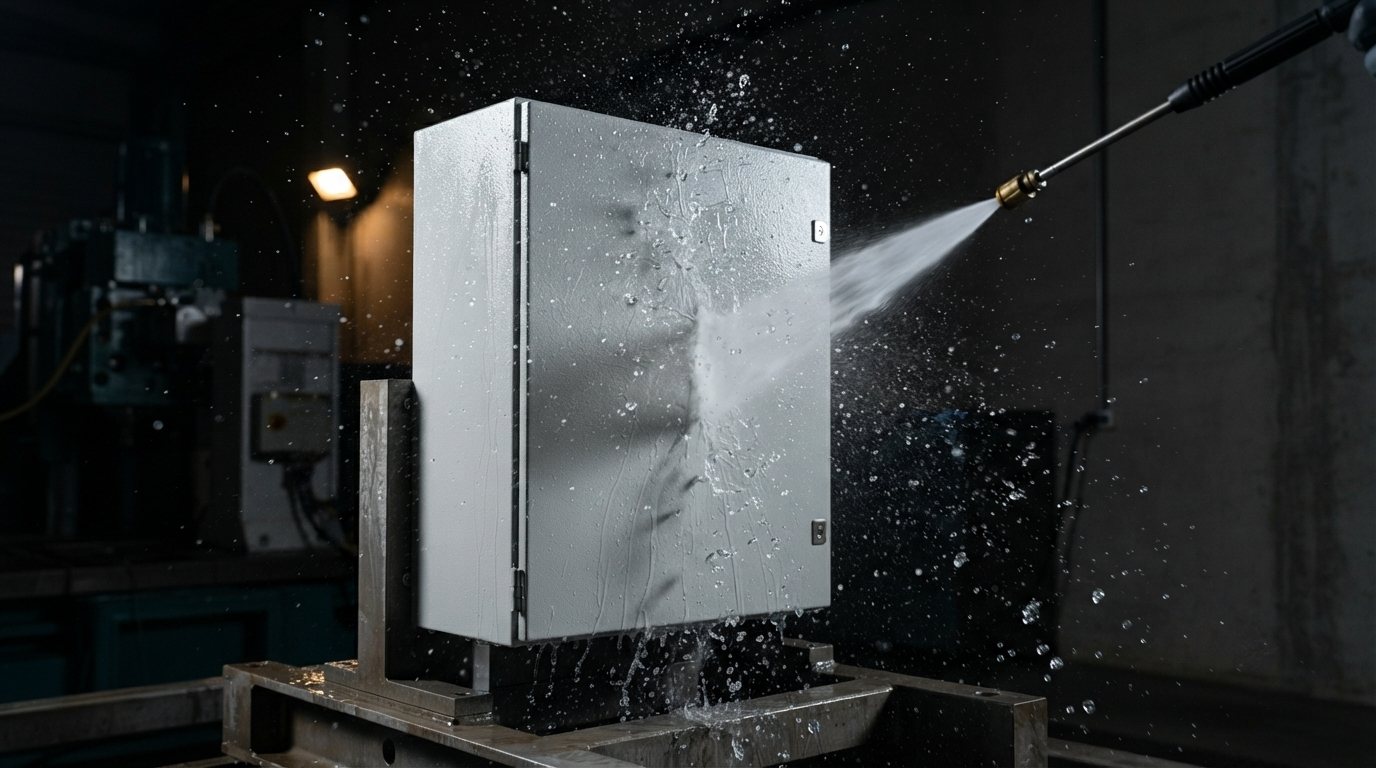
| 6 — powerful water jets | 12.5 mm | 100 litres/min | 2.5–3 m | Heavy storms, powerful hose cleaning, waves on deck |
The IPX6 jet carries eight times the water of the IPX5 jet, which is why IP66 needs better gaskets, compression latches and stiffer doors.
Two points are often misunderstood:
| Installation | Suggested rating |
|---|---|
| Clean indoor electrical room | IP42–IP54 is often enough |
| Indoor factory floor with dust and occasional splashes | IP55 |
| Dusty plants: cement, mining, flour, textile, wood | IP65 minimum |
| Outdoor kiosks, feeder pillars, solar combiner and string boxes | IP65, or IP66 for exposed sites |
| Coastal and monsoon-exposed locations | IP66, in SS 316 or well-coated steel |
| Hose-down areas: food, beverage, pharma, water treatment | IP66 (IP69/IP69K where high-pressure hot washing is used) |
| Pits and areas that may flood | IP67 or IP68, in addition to IP66 where jets also occur |
VERCHO Engineering Solutions manufactures enclosures for IP55, IP65 and IP66 duty in MS and stainless steel, with the gaskets, latches and gland plates to match. Browse VERCHO electrical enclosures or send your site conditions to info@verchogroup.com.
For any question, please write to us at info@verchogroup.com — or send it straight from this page. Our engineering team will reply by email.