Perforated, ladder and wire mesh cable trays compared — load, span, ventilation, cable support, finishes and cost — with a simple guide to choose the right one.

Perforated, ladder or wire mesh? All three carry cables from the switchboard to the load, but they differ in strength, span, ventilation, cable support and cost. Choosing the wrong one means sagging trays, overheated cables or money wasted on steel you don't need. This guide compares the three main cable tray types and shows where each one fits.
A cable tray is an open support system for insulated cables. Compared with conduit, it is quicker to install, easier to add cables to later, and lets cables shed heat to the air. Cable tray systems are covered internationally by IEC 61537 (cable management — cable tray and cable ladder systems), which defines how load, span and deflection are tested; in North America the equivalent is NEMA VE 1.
| Feature | Perforated tray | Ladder tray | Wire mesh tray |
|---|---|---|---|
| Construction | Sheet steel channel with a punched base and side flanges | Two side rails joined by rungs, like a ladder | Welded steel wire grid bent into a basket |
| Typical cables | Small and medium power, control and instrument cables | Large power cables, main feeders, heavy runs | Data, communication, light control and instrument cables |
| Load capacity | Medium | High | Light to medium |
| Typical support span | About 1.5–2 m | About 2–3 m, longer for heavy-duty rails | About 1.2–1.5 m |
| Ventilation | Good | Excellent | Excellent |
| Cable support | Continuous base — good for small, flexible cables | Supported only at rungs — best for stiff, large cables | Continuous grid support |
| Site modification | Needs cutting and bends/fittings | Needs fittings for bends and tees | Easy to cut and bend on site with bolt cutters |
| Relative cost | Medium | Medium to high | Low to medium |
Spans and loads are indicative — always use the manufacturer's tested load/span data for the exact tray, width, side height and thickness.
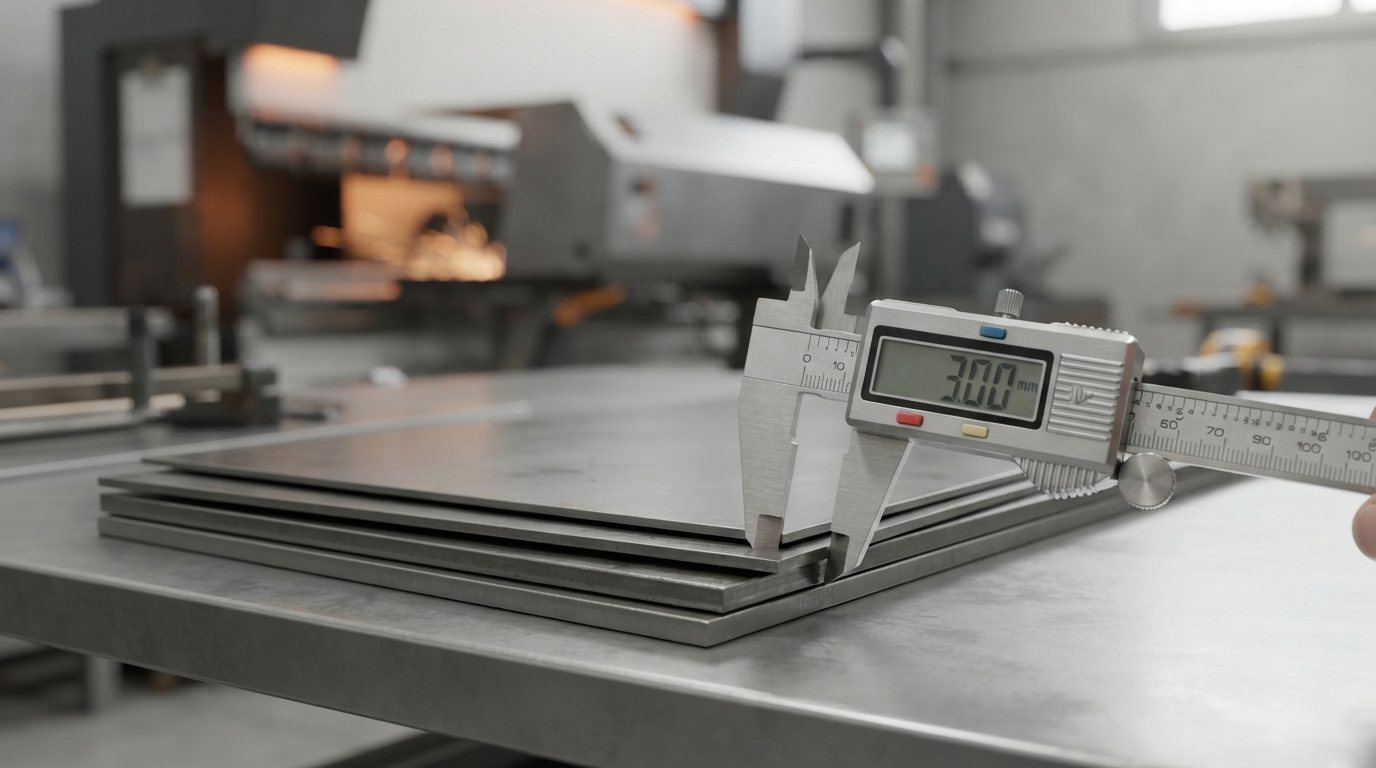
The perforated tray is the most common type in Indian industrial plants and commercial buildings. A sheet steel channel, usually 1.6–2.5 mm thick with 50–100 mm side height, has slots punched in the base. The slots let heat and water escape, save weight, and give points to fix cable ties.
A ladder tray has two strong side rails, often channel or C-sections, joined by rungs at a regular spacing such as 250 or 300 mm. With most of the base open, it gives the best heat dissipation and can carry large, heavy cables over long spans.
Wire mesh trays are made from steel wires welded into a grid, typically around 4–6 mm diameter, then bent into a U-shape. Bends, tees and drops are formed on site by cutting wires, so few factory fittings are needed.
The finish decides how long a tray lasts, often more than the type does:
| Finish | Where it suits |
|---|---|
| Pre-galvanised (GI) sheet | Indoor, dry areas; cut edges have limited protection |
| Hot-dip galvanised after fabrication | Outdoor, industrial and humid areas; thicker zinc covers cut edges too |
| Powder coated (over pretreated or galvanised steel) | Visible indoor runs where colour coding or appearance matters |
| Stainless steel SS304 / SS316 | Food, pharma, coastal, chemical and wash-down areas |
| Aluminium | Weight-sensitive and some corrosive atmospheres |
| FRP / GRP | Highly corrosive chemical plants and offshore |
Use fasteners with equal or better corrosion resistance than the tray — see fastener coatings and corrosion.
VERCHO Enterprises supplies perforated, ladder and wire mesh cable trays with matching bends, tees, covers, supports and fasteners for panel builders, solar projects, data centres and industrial plants. Send us your cable schedule and route, and we will suggest the tray type, size and finish. See vercho.co.in or write to info@verchogroup.com.
Related reading: cable glands guide and IP55 vs IP65 vs IP66.
For any question, please write to us at info@verchogroup.com — or send it straight from this page. Our engineering team will reply by email.